
Personal Injury
Big Rig Accidents
Accidents involving 18-wheelers and semi-trucks are among the deadliest on California highways. We hold negligent carriers and drivers accountable for the devastating harm they cause.
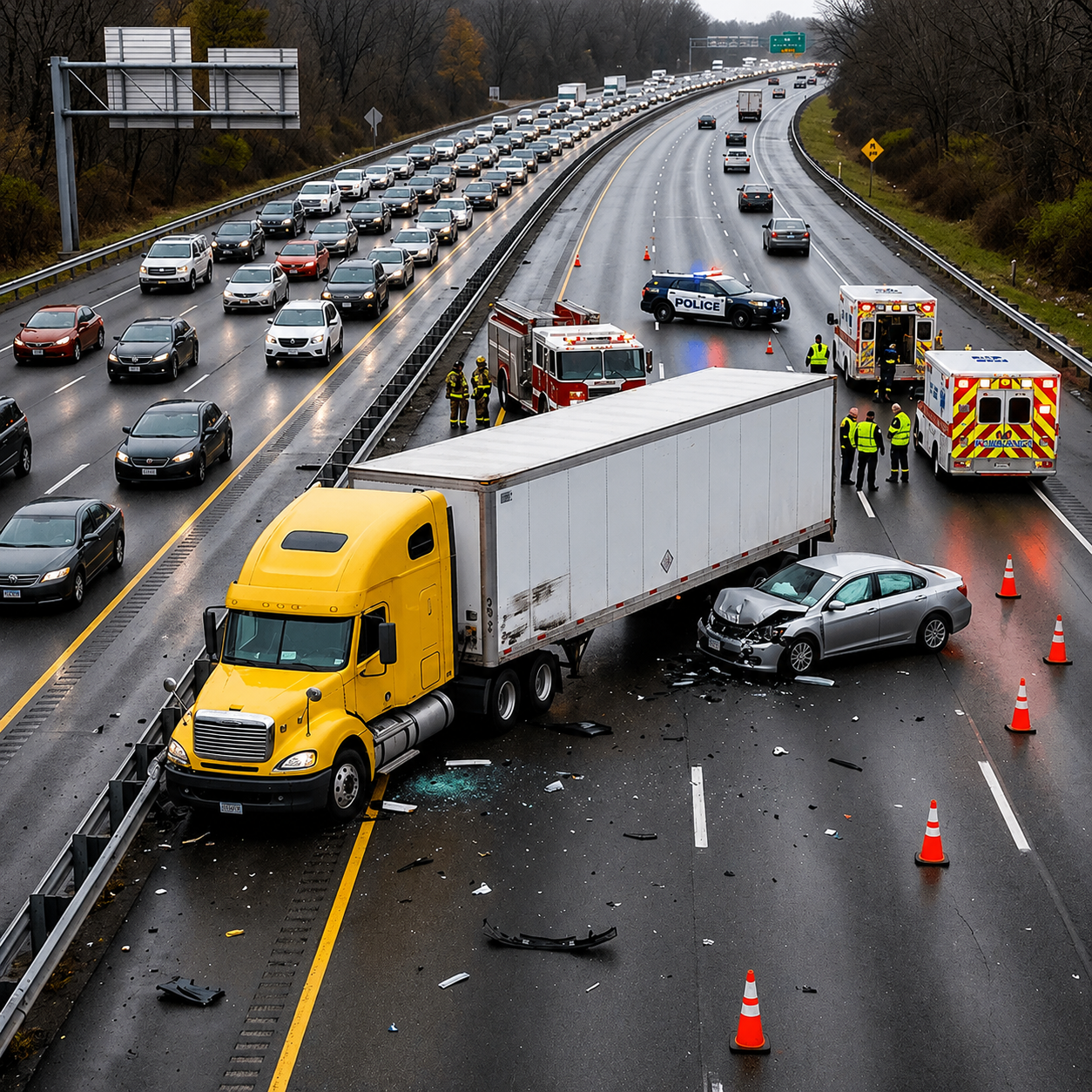
A fully loaded 18-wheeler can weigh up to 80,000 pounds — nearly 30 times more than a passenger car. When these vehicles crash, the results are often catastrophic or fatal. Big rig accident cases are governed by complex federal FMCSA regulations and involve layered liability across drivers, carriers, shippers, and equipment manufacturers. Our firm has the experience to navigate every level of that complexity on your behalf.
Large trucking companies and their insurers have legal teams that begin working immediately after a crash. We match that urgency — issuing preservation letters, retaining accident reconstruction experts, and securing electronic logging device data before it is overwritten.
What We Handle
Types of Big Rig Accident Cases
Compensation
What You May Be Entitled To
Big rig crashes frequently cause life-altering injuries: spinal cord damage, traumatic brain injury, amputations, severe burns, and wrongful death. Compensation can include medical expenses, lost wages, reduced earning capacity, pain and suffering, and property damage. We work with medical and financial experts to document the full, long-term impact of your losses.
Commercial carriers carry substantial insurance policies. When a company's systemic negligence — falsified logs, deferred maintenance, or unrealistic delivery schedules — contributed to the crash, we pursue punitive damages in addition to full compensatory recovery.
After an Accident
Steps to Protect Your Claim
Big rig cases require immediate legal action. Electronic logging device data can be overwritten in as little as 30 days. Here is what we recommend:
Seek Medical Attention Immediately
Get evaluated by a doctor as soon as possible. Internal injuries, spinal damage, and traumatic brain injuries may not be apparent at the scene. A medical record ties your injuries directly to the crash.
Document Everything You Can
Photograph the vehicles, the road, skid marks, and any cargo. Note the trucking company's name, the truck's DOT number, and the trailer number. Collect witness contact information.
Do Not Speak to the Carrier's Insurer
The trucking company's insurance adjuster may call within hours of the crash. You are not required to give a statement. Anything you say can be used to limit your recovery. Contact us first.
Contact an Attorney Immediately
We issue preservation letters and retain investigators right away. The sooner we act, the better our ability to secure the black box data, dashcam footage, maintenance records, and driver logs that can make or break your case.
Common Questions
Frequently Asked Questions
What federal regulations apply to big rig drivers?
Commercial truck drivers are regulated by the Federal Motor Carrier Safety Administration (FMCSA), which sets strict limits on driving hours, required rest periods, vehicle inspections, and drug testing. Violations of these rules are powerful evidence of negligence that we use to build your case.
How long do I have to file a claim in California?
California's statute of limitations gives you two years from the date of the accident to file a personal injury lawsuit. If a government entity is involved, that window shrinks to six months. In big rig cases we strongly recommend acting within days — not months — to preserve critical evidence.
Can I sue the trucking company, not just the driver?
Yes. Under theories of respondeat superior and negligent hiring, the carrier can be held directly liable for a driver's conduct. We investigate the company's safety record, hiring practices, and maintenance history to build the strongest possible case against every responsible party.
Injured? Get The Compensation You Deserve.
Our greater Sacramento personal injury attorney is ready to fight for you. Free consultation. Contingency fee, so you pay nothing upfront.